Showing posts with label sambar. Show all posts

Tuesday, 26 July 2011

Idli Dosa Sambar


Idli Sambar (Arachuvitta sambar)

Idli and dosa are a staple in TamilNadu and I am sure they will get anyone who has tasted it before to drool just thinking about soft idlis, yummy sambar and delicious chutney. I recently heard a tamilian here say to him even if the restaurant does not serve good idli and dosa it is ok as long as the sambar is yummy. Such is the love for sambar and I would be lying if I said I did not like it. When growing up, my mom used to make delicious sambar that prompted me to eat so many dosas that she will have to make so many of them. A few people have asked me for recipe for idli sambar and finally here is how my mom makes it and now I make it. It is quite the same as the famous ‘arachuvita sambar’ made in Brahmin households. I would suggest you to use a variety of vegetables like drumstick, carrot, ‘avarakai’, eggplant etc. I did not have most of them but had an eggplant to use up. If you use other vegetables the process would still be the same. This sambar has been a hit in my family and also among my friends and always gets me great compliments. Loaded with vegetables and lentil and aromatic spices, it can fill you up in a healthy way. I have suggested certain quantities for the paste to grind. Depending on how much sambar you make (which depends on how diluted you like) and also depending on whether or not you prefer a lot of the freshly ground spices, you may have some paste left over. Just put it in an airtight container and stick it in the fridge to use for sambar next day or even add it to the vegetables you prepare. As ‘arachuvita sambar’ is also made during some festivals, on such occasions you can skip the onions.

4-5 pearl onions (sambar onion)
1 teaspoon tamarind paste
Turmeric powder
Asafoetida
Couple of handful of vegetables of choice (like drumstick, aubergine, carrots etc.)
Few curry leaves
2 heaped teaspoons sambar powder
¼ cup toor dal, cooked
1 teaspoon mustard seeds
Salt to taste

For the paste:
3 tablespoon coriander seeds (dhania)
3 tablespoons channa dal
4-5 dry red chillies
½ teaspoon fenugreek seeds
2 teaspoon grated coconut
2-3 pearl onions

To make the paste, fry all mentioned ingredients except coconut. It is easier to fry each of them separately as they take different length of time. Roast dhania until it starts to dance in the saucepan; roast channa dal until it turns golden brown; roast dry red chillies until they just start changing colour; roast fenugreek seeds until it turns slightly dark; add few drops of oil and fry the onions until it turns golden

Heat little oil in a kadai and add the mustard seeds. Once it splutters, add the pearl onions, turmeric powder, asafoetida, vegetables and stir

Add the sambar powder and give a quick stir

Add 2 cups of water, tamarind and curry leaves, cook covered until the vegetables are done
Add the ground paste, dal and salt and mix well. If needed add more water and boil

Serve hot with idli, dosa, pongal, upma or rice

Saturday, 23 July 2011

Kathrikai Gothsu (Aubergine/Eggplant in Sauce)


Kathrikai Gothsu (Aubergine/Eggplant in Sauce)


Indian marriages are known for their grandeur, scale and food and being a south Indian, I used to love the food at south Indian marriages (I did not get to go to more than one North Indian marriage though). These days, in order to manage the crowd better, close relatives and friends are typically invited for the actual ceremony while others are invited to the reception. Honestly, reception food is a bit disappointing as it is not the traditional menu and is in between north and south Indian food. Reason I am talking about food in wedding is because I used to love the gothsu served with breakfast during weddings. Usually served with upma or pongal, I always enjoyed the subtle flavours in it. I say subtle because it usually has sour and some heat but in moderation and none of them overpower each other. ‘Masiyal’ is what I used to make usually with pongal and upma until I cracked the gothsu recipe. Ever since I was successful with this, it has become a regular on our menu. My husband does not like very hot and sour dishes so this is perfect balance for all of us. Here is how I make it…

4-5 eggplants, chopped (use just one if you are using the big Spanish eggplant)
2 tablespoon channa dal, cooked (I pressure cook it but you could soak it for a while and cook on hob)
½ teaspoon tamarind paste
1 onion, sliced
2 tomatoes, chopped
1 teaspoon mustard seeds
Few curry leaves
Turmeric powder
Asafoetida
2 heaped teaspoons sambar powder
1 teaspoon cooking oil
2 green chillies, slit
Salt to taste

Heat the oil and add the mustard seeds. Once it splutters, add the onions and green chillies

Once onion turns soft, add the tomatoes and cook until it turns mushy

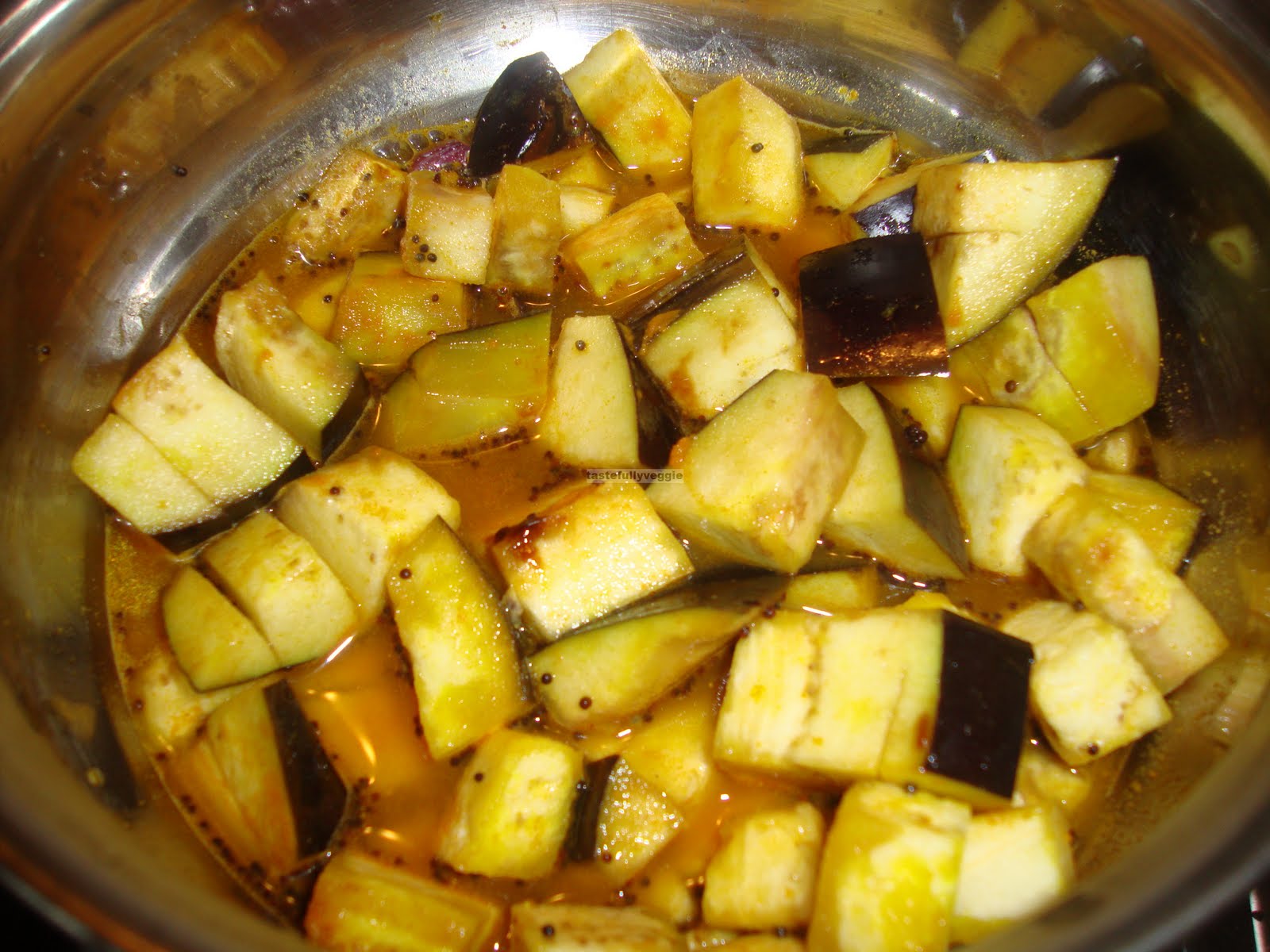
Add turmeric powder, asafoetida, curry leaves and the eggplants. Add enough water to submerge the ingredients, add tamarind paste and salt and cook until eggplants are done


Add the sambar powder and cook until raw smell goes

Add channa dal and simmer for a few minutes

Serve hot


Monday, 9 August 2010

Keerai Mor Sambar (Yogurty Spinach Sauce)


Arachu vitta Keerai Mor Sambar (Yogurty Spinach Sauce with Freshly  Ground Spices)


Have I mentioned before that I get uncomfortable if I do not have a food experiment planned when I am in the kitchen? It was one such morning and I was so uneasy. I felt like I am wasting something – don’t know what though. Had a quick look at the contents of my refrigerator and was quite keen on finishing off any remaining vegetables so we could get a fresh stock during the weekend shopping. A bag of spinach was lying and was quite attractive with its green leaf. Easiest recipe with it is probably to just sauté it but what is special about that. Also, my husband had mentioned earlier that he would love to eat real south Indian meal for lunch on Sunday. He is not a fan of rasam but loves sambar especially with freshly ground spices. I was quite bored of making sambar and hence wanted to come up with a hybrid. That is how this recipe was created. You may recall reading a post on Mor Sambar, which you may have noticed is different from Mor Kuzhambu. You will notice that this recipe is Mor sambar as well but will taste very different from the earlier one. Here is how I did it, why don’t you try and see the difference yourself?

2 handful of spinach chopped (more if you like)

1 cup stirred yogurt

1 teaspoon mustard seeds

¼ teaspoon turmeric powder

Asafoetida

½ cup well cooked Tuvar dal (toor dal/pigeon peas)

2 teaspoons channa dal

4 teaspoons coriander seeds (dhania)

2-3 dry red chillies

Salt to taste

In a deep dish, put the spinach with just a dash of water and cook. Also add some asafoetida and turmeric powder


Once the spinach is almost done, add the yogurt and dilute with desired amount of water (this depends on how thick you prefer to have your sambar. You could add a bit now and dilute further towards the end). Also add the dal.


In the mean time, dry roast channa dal until golden brown. Roast coriander seeds until you get a nice aroma and seeds start to slightly pop. Roast the chillies until it looks crisp. Cool and grind all together to reasonably fine powder.

Once yogurt spinach mixture starts boiling, add about 2 table spoons of the ground powder, allow it to boil.


Add salt after you take it off the flame. To temper, add mustard seeds to some heated oil. I also added a broken red chilly. Add to the sambar.


You may have some spice powder left over, you can add this to usual sambar or vegetables.

I am sorry the photos are not great this time, hopefully will get better next time I make it.

Sunday, 18 April 2010

Mung Dal Sambar/Mung Dal Stew


Mung Dal Sambar/ Mung dal stew
Sambar is probably one of the most popular dishes in Southern India, especially Tamil Nadu. I am generally not a big fan of it but my husband loves it. I always make varieties of sambar quite often and ofcourse I do have some favorites. I try to keep the taste unique depending on what the main dish is and that is why I started making mung dal sambar.
Mung is one of the several lentils that we commonly grow and consume in India. Mung bean which is usually green in colour and ovoid in shape is broken and dehusked to yield mung dal. It is quite a versatile dal as it can be used to make a snack by itself and ofcourse a variety of other dishes. Like most dals, it is a good source of protein. Also, this dal is said to cause less wind in the digestive system than other dals.
For this recipe, my main intent was to avoid tamarind as it tends to give a wierd taste that does not go with my main dish which is usually idlis. Here is how I make this nice sambar
¾ cup mung dal
3 tomatoes finely chopped
6 -8 shallot onions or pearl onions
3 green chillies
3 cloves of garlic (optional)
1 tablespoon sambar powder or ½ tablespoon chilly powder
¼ teaspoon turmeric powder
Few pinches asafoetida
Handful of coriander leaves chopped
1 teaspoon mustard seed
1 sprig Curry leaves (optional)
Salt as required
Cooking oil
Cook the dal preferably in a pressure cooker, in which case you will need water an inch above the level of dal. In a sauce pan or wok or kadai heat about 1 tablespoon oil and add the mustard seeds. Once they splutter add curry leaves, turmeric powder and asafoetida. Now add onions (cut them coarsely but if they are small, then just halve them), green chillies and garlic. Once the onions turn soft, add the tomatoes and cook until they become pulpy and come together. Adding few pinches of salt will help speed up the cooking and add water only after it is pulpy. Add the dal and required amount of water based on desired consistency. While it begins to boil add sambar powder or chilly powder and salt. Few minutes later add the coriander leaves and boil for no longer than couple of minutes.

Friday, 12 March 2010

Mor Sambar


Thank god, I had the opportunity to visit my native place Kumbakonam during this vacation and also do my favourite activity of shopping in front of Kumbeswaran temple. This is a nice long stretch with shops on both sides selling indigenous utensils, gift articles, junk jewellery and toys among other things. While my mom was buying the ‘Pambu Panchangam’ for us, I was looking for cookery books and came across this ‘Samaithu Paar’ (Cook and See) by Meenakhi Ammal. It has some interesting traditional recipes and this was one of them. Me being me, I could not just go strictly by a book and had to do it my way while taking the idea and key ingredients from the book.
This is a very simple recipe and is slightly different from Mor kuzhambu and pachadi in terms of preparation but way different from the two by taste. Here is my version of this simple recipe...
½ cup toor dal (pigeon peas)
1 cup sour curd/yogurt
1 teaspoon mustard seeds
1 teaspoon fenugreek seeds
6 dry red chillies
2 green chillies
Salt as required
1 cup cubed and cooked pumpkin
1 teaspoon grated ginger
1 teaspoon cooking oil
1 sprig curry leaves
Rinse the dal and soak in water just enough to cover the dal for about 20 minutes. In a deep dish add oil and mustard seeds. After it stops spluttering, add fenugreek seeds, red chillies (break them open), grated ginger and green chillies (just cut them into two pieces before adding. Also add curry leaves followed by the sour curd and cooked pumpkin. To cook the pumpkin, just boil in water or if desired add little tamarind juice to the water. In the meantime coarsely grind the soaked dal and add with rest of the ingredients in the deep dish. Allow it to boil once and cook in low flame throughout. Season with required amount of salt and serve.
You could do this dish with brinjal (egg plant) or ladies finger (okra) by just stir frying them in little bit of oil. The dal in the dish is helpful towards daily protein intake in a vegetarian diet. Due to the nature of ingredients and also because the spices are not ground, this dish will taste best if allowed to rest for about half a day with the flavours from fenugreek soaking and heat from the chillies oozing !!