Showing posts with label vegetables on the side. Show all posts

Thursday, 13 November 2014

Agathi Keerai Poriyal


Agathi keerai in Tamil, scientific name is sesbania grandiflora and in English the spinach variety is called as august tree leaves or humming bird tree leaves. It is extremely nutritious like most leafy greens. It is part of the special food prepared on dwadesi, the day after ekadesi. Reason is that on ekadesi, Hindus normally fast and we are expected to break the fast next day with a certain menu. One of them is agathi keerai as it has ability to sooth stomach ulcers. Some may fear the fasting but it is interesting how our ancestors had thought through it and designed the menu around it. It is not often that I get hold of these but here is what I made with them this time…

3 tablespoon mung dal
4 tablespoon grated coconut (I used dessicated coconut)
1 dry red chilly
1 bunch agathi keerai, leaves taken off the stalk and washed well
1 teaspoon mustard seeds
Salt to taste
Turmeric powder
Asafoetida

Cooking oil (I used coconut oil)

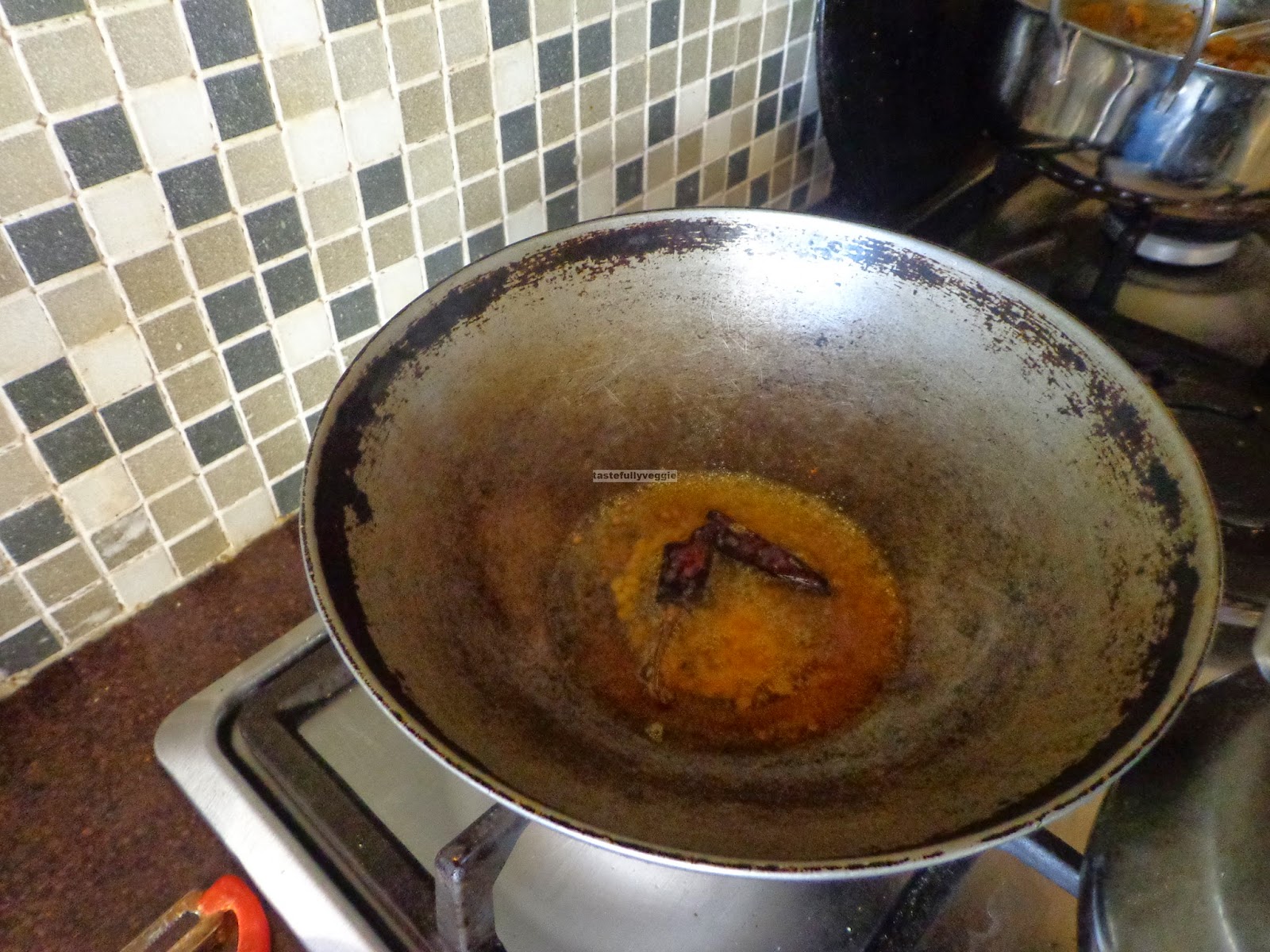
Heat oil in a pan and add mustard seeds and after it splutters, add turmeric powder, dry chilly and asafoetida. 

Add the leaves, required water and allow it to cook and add some salt half way through

In another small pan, add the dal and cook it with required water. The dal should be well cooked but not mushy


Once leaves are cooked and all water is dried, add mung dal and coconut and fry for couple of minutes
Serve with cooked rice!


Saturday, 15 February 2014

Saag Paneer


Saag Paneer
I guess everyone has days when they just want to throw things together so a scrummy meal turns up at the end. I have hose days often because I cannot begin to tell you how tight I am on time. I try to make three side dishes for rotis on Sunday so I only have to make the rotis in the evenings after work. I try to keep things simple and avoid additional processes like grinding etc. While a traditional palak paneer would require blending to smooth puree and so on, I was not up for it although we all love it. I decided to sauté everything and it did come together quite well. Here is how I made it...

2-3 bunches of palak/saag
125g paneer, cubed
1 onion, diced
1 tomato, cut into quarter
½ teaspoon black onion seeds
½ teaspoon cumin seeds
1 teaspoon garam masala
Turmeric powder
2-3 green chillies, slit
1 teaspoon coriander-chilly powder (use just coriander powder if you do not want any heat)
Salt to taste
Cooiking oil

Heat oil and add the black onion and cumin seeds. Once cumin begins to darken, add onions, add the turmeric powder and green chillies and sauté for a minute


Once the onions turn translucent, add the spinach and tomato. We are adding tomato with spinach as we do not want it to get mushy unlike regular curry

Once spinach is cooked, add the spice powders, required salt and cook until raw smell goes.


Add the paneer and cook for 3-4 minutes and serve!


Tuesday, 8 October 2013

Cauliflower Keema


Cauliflower Keema
I have never had real keema so I cannot tell you if this is close but the idea of this dish is to cook minced vegetable. It is cauliflower that I picked for this dish and result was quiet good. I used it to stuff into dosa to make keema masala dosa one evening and then layered it over a very simple pulav rice for packed lunch. I used tandoori masala which is typically used for non-vegetarian dishes and I think it helped. Here is the recipe without any more rant…
1 medium cauliflower, grated
1 onion, finely chopped
1 small tomato, cubed
3 cloves crushed garlic
1 small piece of ginger, grated
1 cup green peas
2-3 green chillies, chopped
1 teapsoon cumin seeds
1 tablespoon ghee and some cooking oil
1 teaspoon coriander powder
1 teaspoon chilly powder
1 teaspoon cumin powder
1 heaped teaspoon tandoori masala or garam masala
Turmeric powder
Some chopped coriander leaves

Heat some oil and ghee in a heavy bottom pan and add cumin seeds. Once it becomes golden, add onions and fry till they begin to change colour and also add garlic, ginger and chillies

 Add the grated cauliflower and some turmeric powder, mix and fry for a couple of minutes

Add all the spice powders and the tomatoes and peas. Fry for couple of minutes, add salt and cook covered until veggies are well cooked. You may want to add few spoons of water so it does not burn


Allow it to cook on low flame uncovered for a couple of minutes so all extra water vaporises and you are left with a dry-ish curry.

Serve with rice or rotis or dosas

Thursday, 12 September 2013

Potato and Cauliflower stem sabji


Potato and Cauliflower stem sabji
Call me frugal but I just love to find ways of using as many edible parts of a vegetable as possible. When I was in college, my mom once mentioned that some of her colleagues cook the cauliflower stem. By stem, I am referring to the rib of the outer leaves that cover the curd. I then tried using it in a gravy and was quite good. Years later, I am beginning to do the same again. This time, I have used it in a dry sabji and when combined with potatoes, anything would go down with my better half. It is quite nutritious as well so that makes me even happier that I managed to use it. Avoid using the thick ones as they are very fibrous, the tender ones are ideal. Here is a simple recipe...
1 onion, chopped
About 10 baby potatoes, boiled and peeled
Tender stalks from cauliflower, chopped
1 teaspoon cumin seeds
1 teaspoon chilly powder
½ teaspoon sabji masala or garam masala
Turmeric powder
Salt to taste
½ teaspoon amchur powder
Cooking oil
Heat some oil and add the cumin seeds. Once it browns add the onions and cook until it just begins to change colour

Add the stalks and little salt and cook covered until it is cooked i.e. soft

Add the boiled potatoes, turmeric powder, chilly powder, garam masala, more salt if needed and amchur powder and cook until all raw smell goes away.

Ready to serve


Monday, 13 May 2013

Oven Roasted Aloo Jeera


Oven Roasted Aloo Jeera

It is only Monday today but I am so exhausted and the rest of the days are quite busy at work. Hope I find some strength from somewhere. Today has been so demanding at home as well that I could not even cook much. Anyway, enough of my rant as it does not do any justice to this yummy dish. Potatoes can save the day when one does not have strength or motivation to do much cooking and this dish is ideal anytime. I would suggest this be served fresh from the oven to enjoy most of the flavor  You can add any other spice powders you may like but here is my simple recipe...

3 large potatoes, cubed
1 generous teaspoon cumin seeds
1/2 teaspoon chilly powder
1 tablespoon chopped coriander leaves
Salt to taste
Turmeric powder
Cooking oil

Put the potato cubes drizzled with some oil in an oven proof dish and cook at 180degC for about 15 minutes, stirring in between

 Once the potatoes are almost done, add salt, turmeric powder, chilly powder. You could either add the cumin seeds straight away or temper it in some oil until it just begins to brown. I do the latter as it is more flavourful. Drizzle bit of oil and roast for further 8-10 minutes

Add the coriander leaves and it is ready!


Tuesday, 23 April 2013

Oven roasted Achari Baingan


Oven roasted Achari Baingan
I absolutely love aubergine/eggplant/brinjal. Call it by whatever name you like, I love it, period. I have now heard from quite a few people that they dislike this veggie, some do not know what to do with it. For me, there is no limit to what we can make with this beautiful veggie. The varieties I get in this part of teh world do need plenty of seasoning and oil to get good results and there are times when I cannot be bothered waiting for it to cook on the hob. My sister-in-law had mentioned that she had good results roasting eggplants in oven and I often roast the whole large eggplant instead of charring on flame. So I decided to cook them in teh oven for this wonderful achari dish. Achar means pickle and as the spices used in this are typically used for north Indian pickles, it gets the name achari. Fennel seeds are usually added but I skipped it. The dish was super scrummy and for the little effort that I put in to prepare it, the results were plenty-fold better. I used the left over spice powder to prepare a similar dish using green chillies!

1 long brinjal, cut into roundels, about ¼ inch thick (about 2 cups of cut brinjal)
Turmeric powder
½ teaspoon amchur powder
Salt to taste
Cooking oil
½ teaspoon methi seeds
1 teaspoon mustard seeds
½ teaspoon cumin seeds
½ teaspoon sesame seeds
½ teaspoon nigella seeds
½ teaspoon chilly powder

Sprinkle turmeric powder on the cut brinjal (this helps avoid it going black) and rest until oven preheats to 180degC. Drizzle some oil and mix. Cook this in the oven for about 20 minutes, mixing it in between

Roast all seeds and crush to powder

Once the brinjals are done, add the crushed powder, salt, chilly powder and amchur powder, mix and put in oven for about 5-8 minutes

Serve hot with rice or rotis. I used the left over spice powder to fill into some slit green chillies and sautéing them in mustard oil...yum!


Wednesday, 28 November 2012

Peerkangai Thokku (Ridgegourd Curry/Turiya/Turai curry)


Peerkangai Thokku (Ridgegourd Curry/Turiya/Turai curry)
After our relocation more inland, it has been easier to get rid of Indian vegetables. Although we eat many of the ‘english’ vegetables, I do seek comfort in cooking and eating the veggies I grew up eating. One such was ridgegourd. Ridgegourd is rich in fibre and also said to have cooling properties. It is supposedly rich in vitamin C, making it good for our immune system and also rich in other minerals like manganese, magnesium, zinc. I was looking for ridgegourd recipes and came across a number of different versions of the ‘thogayal’ made with the peel of this goody. My grandmom makes it too and I will post that recipe sometime. Long story short, I did not see recipes that suggested the use of the inside of the vegetable (apart from the stuffed ridgegourd I had posted earlier). However, the good this about this recipe is that it uses the skin and the flesh and that means you do not have to spend time peeling the vegetable, but you can also get to consume the goodness from the skin. My husband does not usually like something like a thokku, so I made it slightly runny to make it seem like sambar and told him it was in between sambar and vegetable on the side and so pleased it went down well. This recipe is a keeper! Here it is for you to try...
1 ridgegourd, sliced thinly with skin
5-6 pearl onions, chopped
2 large tomatoes, chunkily chopped
1 teaspoon mustard seeds
1 teaspoon urd dal
1 teaspoon sambar powder
Asafoetida
Turmeric powder
3 green chillies, slit
Few curry leaves
4 cloves garlic, finely sliced
½ teaspoon tamarind extract
Salt to taste
Cooking oil, preferably gingelly oil

Heat some oil and add mustard seeds, urd dal, asafoetida and turmeric powder

Once the seeds splutter, add the onions, green chillies, garlic and curry leaves and cook for couple of minutes

Add the tomatoes and cook for another couple of minutes

Add the ridgegourd slices and required salt, some water and cook covered until ridgegourd is cooked. You may need to add water every now and then and stir every now and then

Add the tamarind paste and cook for couple of minutes

Add the sambar powder, required water and cook until raw smell goes away

Depending on how thick or runny you like it to be, add more water or wait to reduce further
Serve with rotis or rice


Sunday, 10 June 2012

Pavakkai Thokku (Bittergourd Thokku)


Bittergourd Thokku

Believe it or not, I love bittergourd because it is bitter and presents quite a challenge to make a palatable dish. What makes the vegetable exciting is that the dishes usually need sweet, sour and heat in them so you mask the bitterness to a large degree. Some say very dark green bittergourd are too bitter and best avoided. It is a shame that such a medicinally rich vegetable is not even known in this part of the world. The juice of this vegetable is extremely good to keep blood sugar controlled. I wanted to do something different with this vegetable this time and thought making it like a pickle, i could mix it with rice or eat it with curd rice. I had some spice powder left from making the ennai kathrikai kuzhambu so I have used that in this recipe. Click here to see the ingredients for the spice powder. I quite liked the outcome so here it is for you...

2 bittergourd, seeded, halved and cut
1 teaspoon mustard seeds
Asafoetida
1 teaspoon tamarind paste
Turmeric powder
Salt to taste
1 teaspoon spice powder
½ teaspoon chilly powder
1 tablespoon jaggery
Heat a kadai and add the bittergourd, tamarind paste and enough water to immerse the bittergourd and boil until bittergourd is just done. Drain the liquid and take a ladle and keep poking into the bittergourd so it gets cut into smaller pieces


Heat some oil in the kadai and add mustard seeds. Once it crackles, add turmeric powder, asafoetida and the bittergourd

Add salt, chilly powder, jaggery and mix well.

After all of them come together, add the spice powder and cook for couple of minutes

Serve


Thursday, 2 February 2012

Tindora Sabji


Tindora Sabji


When I started cooking soon after I moved out of India, I remember I used to wonder what some of the vegetables I was familiar with were called in English so I could look for them here. Sometimes I would look for the tamil name for some veggies I came across here. For those like me, tindora as it is known in hindi is called Ivy gourd in English, Kovakkai or dondankai in tamil. I now learned that it is also known as gentleman’s toes, hmm. It is one of the vegetables that I really enjoyed back home but certainly missed it here in Scotland. As usual, whenever we went to Indian grocers far away, I would get some of this vegetable as well. I read that this is good for diabetics as it helps regulate the insulin metabolism. It is also said to have been used to treat asthma, bronchitis, fever, leprosy and jaundice. I usually cook it in some oil and add chilly powder but this time around, I wanted to do something else with it. Mom would make a sabji out of it that would go well with chapattis. I was making this for lunch so paired this with tomato pulav. It turned out to be very good and even though I was unsure if my husband would like it, he quite enjoyed it. So, all well, here is a simple recipe…

3-4 cups tindora, cut into long pieces
1 onion, finely chopped
½ teaspoon chilly powder
½ teaspoon cumin powder
1 teaspoon coriander powder
¼ teaspoon garam masala (add more if using store bought masala powder)
½ teaspoon amchur powder
½ teaspoon kasoori methi
½ teaspoon cumin seeds
1 teaspoon chopped ginger
Turmeric powder
Salt to taste
Cooking oil

Heat some oil and add the cumin seeds. Once it turns brown, add onions and ginger and fry until it changes colour

Add the tindora, required salt and cook covered until cooked

Add coriander powder, cumin powder, kasoori methi, coriander powder, chilly powder and cook on flame for about five minutes

Add garam masala and cook for another couple of minutes and it is ready to serve