Friday, 9 September 2011

Akkaravadisal


Akkaravadisal


Akkaravadisal is a popular dessert among the iyengar community although it was not usually prepared by my mom. My memories of enjoying this delicious dessert come from a Brahmin ritual. My paternal uncle and aunt had passed away at an early age and my father used to carry out the anniversary as per Brahmin tradition (shraddam).It was during this ceremony that akkaravadisal would be made by a professional cook in the traditional way. I remember my paternal grandmother also mentioning that she used to make a lot of this and she was one of the best cooks I have known. This recipe below is the one that I put together based on all the bits and bobs of information I gathered from my grandmother and also recalling (which makes me drool even as I type this) the taste of it. The best way of serving this is with generous portion of ghee poured on top of a hot cup of akkaravadisal but I have tried to reduce the fat and yet make it taste great. Here is the recipe…

¾ cup rice
¼ cup mung dal
3-4 tablespoons raisins
3 tablespoon cashew nuts
¼ cup ghee (you could add more if you wish)
2 pints milk (about 1.1 litre)
1 ¼ powdered jaggery
3-4 cardamom pods
Few strands of saffron (optional)

Heat a couple of teaspoons of ghee and fry and cashews until golden brown and the raisins until they puff up

Wash the rice and mung dal, drain and add it to the left over ghee, add another spoon of ghee if needed. Fry until you get the aroma of the mung dal

Add little over half the milk (about 700ml) and pressure cook until 3-4 whistles. Once done, mash it down well

Add just enough water to dissolve the jaggery and boil

Filter the jaggery solution and add to the cooked rice and mung dal, add another cup of milk, cardamom and saffron and bring to boil

Simmer for 10-15 minutes and keep adding more milk if you like and stir every now and then

Serve warm with some melted ghee on top.

Some like it thick while some like a bit more milk like me. If you add milk later, heat the milk first and then add only to the portion of akkaravadisal that will be consumed immediately. The final colour will depend on the colour of the jaggery.

Wednesday, 7 September 2011

Cauliflower Capsicum Sabji


Cauliflower Capsicum Sabji


Cauliflower used to be an exotic vegetable for me when I was a kid. That was mainly because it was a seasonal vegetable and usually grown more in North India and all this made it a bit expensive. My dad used to love this veggie and would buy a lot of it when available. Later I noticed that cauliflower is more widely available these days all through the year than before but my mom told me she is having difficulty getting it now. The standard instruction for preparing cauliflower would be to cut the florets and put in hot water for about 10 minutes so all the insects and worms come off. The ones that I get in this part of the world usually do not need this step to be done as they are free from insects. I am not particularly happy with that because although it is less work for me, I think it is natural for worms to get into cauliflower etc. and what I get here seems unnatural and synthetic. Ah well, that does not mean that I would welcome a plate of worms for dinner in the name of nature! Anyway, I saw this recipe on a television program and thought it was an interesting combination as the gravy is prepared using besan. It is also flexible in the sense that if you like it dry, just cook for longer and add less water and if you prefer gravy, add more water. Besan tends to thicken as the dish cools, so if you want to run it thinner later, add hot water and mix well. Here is the recipe…

1 medium sized cauliflower cut into florets
1 big tomato, chopped
1 big green pepper, cut into chunks
1 potato, cubed
1 onion, chopped
1 teaspoon grated ginger
2 tablespoons besan (chickpea flour)
2-3 green chillies, slit
1 teaspoon coriander powder
1 teaspoon chilly powder
2 pinches kasoori methi (dried fenugreek leaves)
Turmeric powder
Salt to taste
Cooking oil

Heat some oil and fry the onions until it turns soft

Add the cauliflower, potato, green pepper, ginger and green chillies and required salt. Sprinkle some water and cook covered. Do stir every now and then and if needed add some water

Once the vegetables are cooked, add the tomatoes and cook until it turns mushy

Add the chilly powder, coriander powder, turmeric powder and kasoori methi and cook until raw smell goes

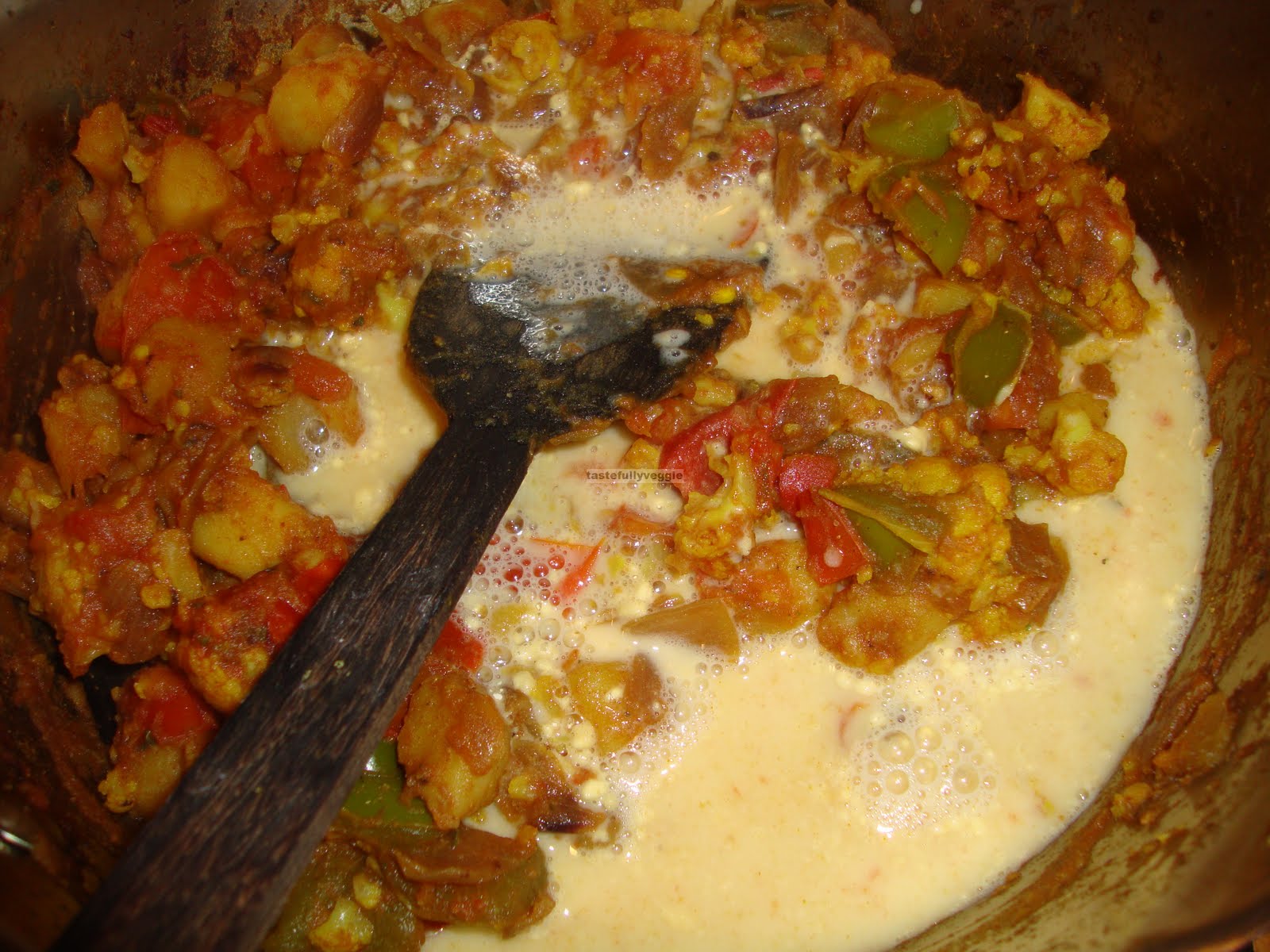
Mix the besan with half a cup of water and make a paste and add this to the vegetables. Stir well so there are no lumps and allow to simmer. Ensure the raw smell goes away and add more water if you like or need. Some may like it as a gravy, in which case add generous portions of water as the besan will thicken as it cools down.

Serve with rotis or rice

Sunday, 4 September 2011

Bajri Dosa


Bajri Dosa


Like always, I got so excited when we went to Edinburgh as I usually get to do my Indian grocery shopping then. The shop that we go to is owned by either a north Indian or a Pakistani. So most of the items will be typical of the north Indian pantry but I would also get a lot of south Indian stuff there. When I went there sometime back, I was so excited to see the variety of cereals in flour form so picked a pack of barley flour, jowar flour and bajra flour. I will talk about the first two in a later post and for now stick to bajra flour. I was so ambitious in getting it and came home and tried bajra roti. As anyone who has tried it before may tell you that it is not the easiest roti to roll and it does not taste quite like regular roti. It was a definite no no from my husband but then I came up with the Aloo bajra roti which was very nice. However, I could still not make it a regular so was pretty much stuck with the flour. It then occurred to me that when I could make ragi dosa with the ragi flour, I could very well make bajra dosa as well. As I have said in previous posts, I am a fermented batter dosa lover and that is how I came up with this recipe. As I use brown rice and also par boiled rice along with bajra flour, this dosa is wholesome and is very nutritious. I would team it with a nice masala, sambar and chutney and would enjoy it. Bajra is a good source of a variety of amino acids (proteins), B vitamins and iron. It is also known as pearl millet and is called ‘kambu’ in tamil. My brother usually makes fun of me saying I make people eat what horses would eat but I would always say we are not as strong as they are so no harm eating these cereals. Also, I would say it is a fair point if they did not taste good, but these dishes are yummy so why would it hurt us to have healthy and delicious dishes? Anyway, enough of my rant, here is the recipe…

1/3 cup urd dal
2/3 cup brown rice (you can use white raw rice instead)
2/3 cup par boiled rice
¼ cup poha (flattened rice)
2/3 cup bajra flour
1 teapsoon fenugreek seeds
Salt to taste

Soak all ingredients except salt and bajra flour together for atleast 6 hours. Grind to paste and add the bajra flour and grind everything to fine batter. Add salt and allow to ferment for a day or night


Heat a tava, pour a ladleful of batter, spread thin to make crispy dosas and add some oil or ghee and once it browns, turn the side and cook about a minute (I also stuffed some vegetable masala to enhance the nutrition)

Serve with chutney and sambar

I stacked them up just to make it more presentable for my guests.