Showing posts with label traditional recipes. Show all posts

Thursday, 13 November 2014

Agathi Keerai Poriyal


Agathi keerai in Tamil, scientific name is sesbania grandiflora and in English the spinach variety is called as august tree leaves or humming bird tree leaves. It is extremely nutritious like most leafy greens. It is part of the special food prepared on dwadesi, the day after ekadesi. Reason is that on ekadesi, Hindus normally fast and we are expected to break the fast next day with a certain menu. One of them is agathi keerai as it has ability to sooth stomach ulcers. Some may fear the fasting but it is interesting how our ancestors had thought through it and designed the menu around it. It is not often that I get hold of these but here is what I made with them this time…

3 tablespoon mung dal
4 tablespoon grated coconut (I used dessicated coconut)
1 dry red chilly
1 bunch agathi keerai, leaves taken off the stalk and washed well
1 teaspoon mustard seeds
Salt to taste
Turmeric powder
Asafoetida

Cooking oil (I used coconut oil)

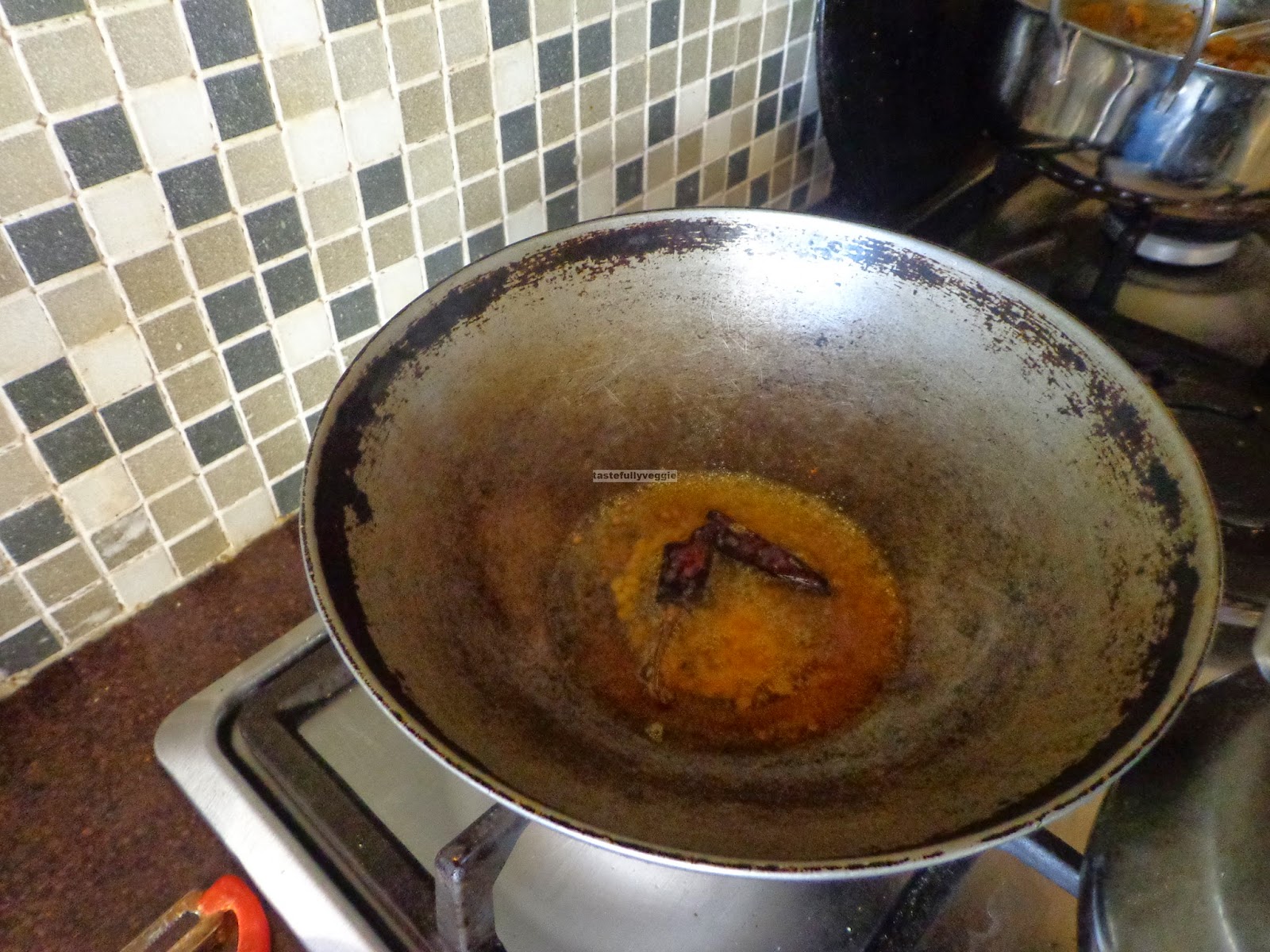
Heat oil in a pan and add mustard seeds and after it splutters, add turmeric powder, dry chilly and asafoetida. 

Add the leaves, required water and allow it to cook and add some salt half way through

In another small pan, add the dal and cook it with required water. The dal should be well cooked but not mushy


Once leaves are cooked and all water is dried, add mung dal and coconut and fry for couple of minutes
Serve with cooked rice!


Saturday, 9 August 2014

Rice Pudding (with variant for Chakkarai Pongal)


Rice Pudding (with variant for Chakkarai Pongal)
I had bought couple of small tubs of cream in the hope to make ice cream. One of it fell from the fridge and went down the drain so I had the second one had to be finished somehow. I did not want to slave over it so kept looking for ways to use cream in dishes that need next to no attention. I came across rice pudding and what a finding it is! The pudding came out really good albeit for people with sweet tooth, it could have done with more sugar. Here is the recipe...
100g rice
600-700 ml rice (i used basmati but you could use pudding rice)
100g sugar
300ml double cream
2 teaspoons vanilla essence
4 small knobs of butter
Chopped nuts for garnishing

Preheat oven to 150degC
Take a deep (because shallow would let milk spill over while cooking) oven proof dish and grease with butter. Add washed rice, sugar, cream, milk, vanilla essence and mix. Dot the butter here and there and put in the oven for about 1.5 hours. You can stir half way through and add bit more milk if needed. Depending on the rice, t he amount of milk needed may vary.


Take out and garnish with nuts


I had made this and taken to a friend’s house and it was given thumbs up. I then decided to adapt this to make it south Indian and save some time while preparing other dishes for a festival.
Short cut yummy chakkara pongal:

Put a cup of rice, handful of mung dal, ¾ cup brown sugar, ¼ cup white sugar, 300ml cream and 600ml milk in a greased deep oven proof dish. Dot the butter like above and cook just like above. Add some saffron after steeping it in hot water or milk. Add milk if needed and stir in between.

Saturday, 2 August 2014

Chakli (Mullu Muruku)


Chakli
It is summer holiday for school now so for the first time, my son is at home. Crispy snacks can always come handy when you have a bored young child around. Rather than buying them, I thought I should give it a try myself. Afterall, it may not hurt too much to fry now and then. I picked something easy and this was it. Also, my son’s friend’s gran had made this and after trying them my son asked me to make some. What I loved about what I made is it tasted quite like ‘kai muruku’, the one shaped with hand without the labour of sitting down to shape them. Hope you like it as well. It is one of the 'batchanams' made for Krishna Jayanthi and even Diwali. Here is the recipe...

3 cups rice flour (I used store bought rice flour)
1 cup besan flour
Salt to taste
Dash of asafoetida
1 teaspoon chilly powder
3 tablespoon oil
1 teaspoon ghee
1 tablespoon white sesame seeds
Oil for deep frying

Sift the flours together and add chilly powder, asafoetida, sesame seeds and salt

Heat the three tablespoons of oil, ghee and add it to the flour mixture and mix to form crumb like consistency. Heated oil and ghee are used to amke sure the murukus come out crispy. Rather check the seasoning at this stage than later


Add water slowly to make a soft dough. The dough must be soft enough to be able to be forced through the mould. Rather add water little by little so it does not become to soft. Also, check the consistency by putting it into the mould and see if it comes out without problem. What you do not want is, hard dough struggling to come out and eventually forces the mould open and falls into hot oil splashing it all over you and the kitchen!

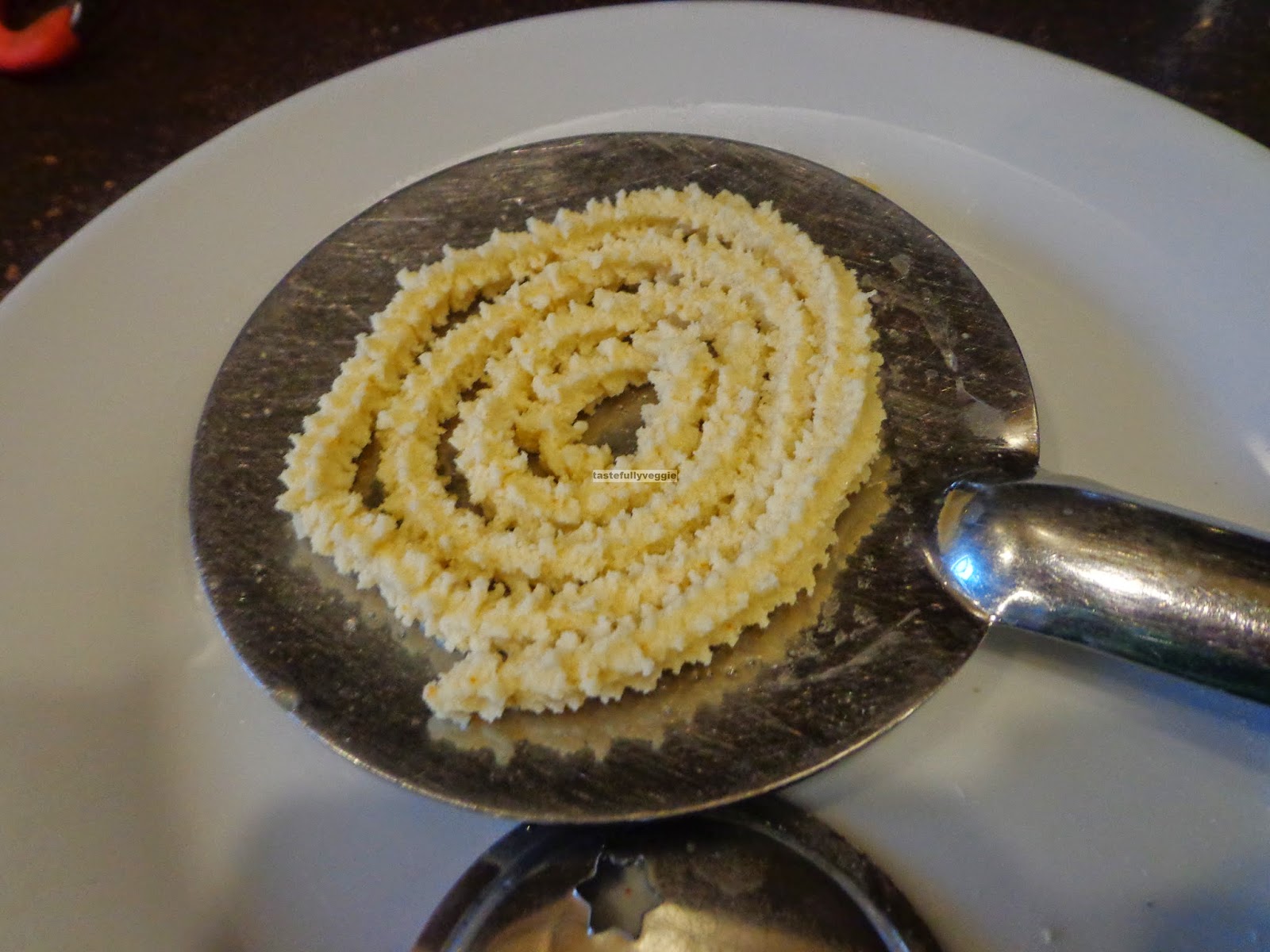
Use the star shaped mould and make murukus on a ladle as shown. This can be slipped into hot oil for frying. Check if oil is ready by putting a small piece of dough in. It is ready if it emerges up quickly. It does not have to be perfectly shaped, so you can even press it directly into the oil in random shape.


Fry both sides until golden, drain and keep aside


Cool completely before putting in airtight boxes.


Friday, 26 July 2013

Green Sundakkai Kara Kuzhambu (Turkey Berry in spicy tangy sauce)


Green Sundakkai Kara Kuzhambu
Using rather unusual ingredients is something I love doing in my cuisine. It is a shame that many traditionally cooked ingredients have gradually lost their presence in dinner tables these days. For me, every time I come across such ingredients, I make it a point to buy them and may end up figuring out later what to do with it. This green turkey berry was no exception. Earlier I had posted a recipe using this little treasure and this time ‘googling’ did not quite help as most recipes suggested use of dried berries. I have written more about these goodies and also how to prepare it in this post. I decided to make something that I will enjoy eating and one of those is ‘kaara kozhambu’ i.e. a spicy tangy sauce with some vegetable in it. It was really good and the berry was no too bitter either. Here is the recipe...

1 onion, roughly chopped
1 tomato, roughly chopped
2-3 teaspoons coconut
1 cup turkey berry aka sundakkai, deseeded
1 teaspoon tamarind extract
1 teaspoon mustard seeds
Few curry leaves
Asafoetida and turmeric powder
1 teaspoon sambar powder
1 teaspoon chilly pwoder
Salt to taste
Cooking oil, preferably gingelly oil

Heat some oil, add mustard seeds, once it splutters, add turmeric powder, asafoetida and curry leaves

Add the turkey berries and sauté for a minute

Add tamarind extract, required water, salt and cook until berries are done

Add the sambar powder and chilly powder

Grind together the onion, tomato and coconut to a paste and add this paste. Boil until all raw smell goes off and thickness is as desired


Serve hot

Tuesday, 1 January 2013

Almond Poppy Seed Drink


Almond Poppy Seed drink
Personally, I do not attach much importance to new year. I fell time is a continuum and for our convenience we divided it into the way we follow today. It seems a bit philosophical, but that’s how I feel about it. Having said that, I am aware that many attach more importance to new year, especially the first day so I thought I will post a recipe on this day. I wanted to post a recipe I learned from my grandmother as I thought it would be a nice way to preserve it while we move forward in time. I did make some modifications to the recipe to make it suitable for us. This is the drink my grandmother would make when we have mouth ulcers. It is one of those recipes that serves as medicines for an otherwise annoying problem. It is quite tasty so you can have it once a week even if you do not have mouth ulcer. Poppy seeds are obtained from the opium plant but do not have the bad effects of the drug itself. On the other hand, it is said to help in nervous disorders and acts as pain killer. It also has essential fatty acids and I am guessing it is for these reasons that it gets used in this recipe. Here is the recipe...

10-12 almonds, soaked and skinned
1 tablespoon poppy seeds, soaked in hot water for about an hour
1 generous pinch of saffron
2 glasses of milk
Sugar to taste

Grind together the almonds, saffron and poppy seeds and once finely ground, add the milk. You could steep the saffron in some hot water/milk to extract the flavour better

Add the milk and required sugar.

Friday, 21 December 2012

Kadappa


Kadappa
I was planning on making  a new variety of dosa and was sure I did not want a chutney to go with it. As it was the first time I was making this type of dosa, I wanted to make sure I have an interesting side dish. I know, trialing to dishes in one meal is a bit of risk but that occurred to me only after I made both of them. I looked for side dish for dosa on google and came across lots of familiar dishes. One dish stood out though – Kumbakonam kadappa. Kumbakonam is the town from which my father and father-in-law hail from. I have been to the place so many times and never once have I heard of this dish. Ofcourse, every time we went there we will go for just the same restaurant which served more of the Brahmin food and I am guessing kadappa id not fit that category. Anyway, I was a bit disappointed that I had no idea about this dish and wanted to try this. Result was awesome. Such a simple dish with simple flavours and it went very well with dosa. It had just a touch of coconut, touch of the aniseed flavour, little ehat from the chillies and very slight tartness from the tomato. It was wonderful! I think this is a great side dish for rotis, rice, idlis, dosa, idiapam and even puttu. For a western palatte, this could make a great meal on its own as it has protein, carbohydrates and other vitamins. Here you go...

2 medium potatoes or 1 large, boiled well
¼ cup mung dal, well cooked
1 teaspoon mustard seeds
2 bay leaves and a cinnamon stick
4 teaspoons coconut (I used dessicated)
Dash of caraway seeds (use more if you like aniseed flavour)
1 teaspoon poppy seeds
1 onion, sliced thinly
3 green chillies, slit
1 teaspoon ginger garlic paste
1 tomato, cubed
Salt to taste
Cooking oil (coconut oil preferably)

Heat some oil in a heavy bottom pan and add the bay leaves, cinnamon sticks and mustard seeds. Allow seeds to crackle

Add the onions and sauté for couple of minutes

Add the ginger garlic paste and green chillies and cook till raw smell goes

Crush the potatoes by hand and add. Add the tomatoes and cook for a couple of minutes.

Add the mashed dal and some water and required salt

Allow to boil and then simmer for about 10 minutes but make sure it does not burn. You could add more water if needed. Dal and potatoes are thickeners so the dish will thicken as it cools.

Grind the caraway seeds, coconut and poppy seeds with required water and add it to the mixture and boil for couple of minutes. Serve!


Saturday, 8 December 2012

Ginger Drink (Inji Surasam)


Ginger Drink (Inji Surasam)
I am trying to post recipes appropriate for the holiday season but the recent attack of cold in my family was a reminder that it is also the cold season. While it is great to munch on biscuits and nack on cakes and cookies, the sugars in them will weaken our immune system. Even if you are on a reasonable diet, you may be down with the cold every now and then. Considering I try to post as many healthy recipes as possible, I thought I should post a wonderful drink that does not just taste great but is super good for cold. It helps alleviate cold symptoms including body pain. To me, it is the best hot, sour and sweet soup. Although honey is also good for the throat, I prefer to use sugar in this case as honey when heated becomes toxic. It is my grandmother’s recipe, so yet again, a traditional gem preserved. I would strongly recommend people who suffer from sinusitis to try this about once in a week or when down with the infection. It will seem like a lot of ginger but you need that heat for it to work. I will try to post more recipes suitable for this season, until then here is a superb drink.
6 inch piece of ginger (about 5-7 cm wide) cut into smaller chunks and coarsely crushed
1 tablespoon cumin seeds
Juice of 1 lemon
2 teaspoons sugar
Pinches of salt

Bring to boil the ginger and cumin seeds in about two glasses of water. Allow it to boil for ten to fifteen minutes so the juices from ginger and cumin seep into the water. It will be quite aromatic at this stage

Take off the flame, add the sugar, salt and lemon juice, mix and drink hot. I normally run it through a sieve before drinking


Monday, 3 December 2012

Lemon Pickle


Lemon Pickle
Pickling is an age old process. The intent was to preserve fruits or vegetables for seasons in which they were not available. My favourite pickle is mango (avakai) and lemon pickle is my husband's favorite. I took this recipe from my grandmom and am glad I will be preserving and passing this on. Whenever you make pickles, please remember it needs an extra dash of salt at the time of preparation for couple of reasons. One is that salt is a preservative and pickling itself is nothing but preserving. The other reason is that when kept for some days, the saltiness comes down, so it needs that initial boost at the start. If you are concerned about people with high blood pressure eating these salty pickles, my suggestion would be to make small batches of the pickle, add less salt. This will be great with parathas and rotis too. I prefer to use unwaxed lemons for pickling and specifically buy them for this.
4 unwaxed lemon, cut into chunks
1 teaspoon mustard seeds
½ teaspoon fenugreek seeds
A small piece of solid asafoetida (use powder if solid not available)
Turmeric powder
1-2 teaspoon chilly powder
Salt
Cooking oil preferably gingelly oil

Cut the lemons into chunks and sprinkle some salt. Cover tightly and keep aside for 1 or two days. This will tenderise the skin

Heat a kadai and roast the fenugreek seeds until its colour starts to darken. Heat little oil and also fry asafoetida until all its sides puff up and start darkening. Cool and grind to powder


Pour more oil in the kadai and add mustard seeds. Once it crackles, add turmeric powder and the salted lemon with any liquid it may have, mix

Cook this for couple of minutes and add the ground powder, required salt. Remember pickles need to be salted a wee bit more as the saltiness reduces over time. Having said that, if lemon pickle will be consumed very quickly in your house, you can reduce amount of sugar as you do not worry about how long it will keep.  Add chilly powder, more oil and stir. 

Cook this for atleast 10 minutes. You will notice the skin is now much softer and more liquid has come out. However, do not cook too long and allow all the moisture evaporate as it will make the pickle dry

Store in an air tight container, preferably in the refrigerator