Showing posts with label kuzhambu. Show all posts

Friday, 26 July 2013

Green Sundakkai Kara Kuzhambu (Turkey Berry in spicy tangy sauce)


Green Sundakkai Kara Kuzhambu
Using rather unusual ingredients is something I love doing in my cuisine. It is a shame that many traditionally cooked ingredients have gradually lost their presence in dinner tables these days. For me, every time I come across such ingredients, I make it a point to buy them and may end up figuring out later what to do with it. This green turkey berry was no exception. Earlier I had posted a recipe using this little treasure and this time ‘googling’ did not quite help as most recipes suggested use of dried berries. I have written more about these goodies and also how to prepare it in this post. I decided to make something that I will enjoy eating and one of those is ‘kaara kozhambu’ i.e. a spicy tangy sauce with some vegetable in it. It was really good and the berry was no too bitter either. Here is the recipe...

1 onion, roughly chopped
1 tomato, roughly chopped
2-3 teaspoons coconut
1 cup turkey berry aka sundakkai, deseeded
1 teaspoon tamarind extract
1 teaspoon mustard seeds
Few curry leaves
Asafoetida and turmeric powder
1 teaspoon sambar powder
1 teaspoon chilly pwoder
Salt to taste
Cooking oil, preferably gingelly oil

Heat some oil, add mustard seeds, once it splutters, add turmeric powder, asafoetida and curry leaves

Add the turkey berries and sauté for a minute

Add tamarind extract, required water, salt and cook until berries are done

Add the sambar powder and chilly powder

Grind together the onion, tomato and coconut to a paste and add this paste. Boil until all raw smell goes off and thickness is as desired


Serve hot

Wednesday, 28 November 2012

Peerkangai Thokku (Ridgegourd Curry/Turiya/Turai curry)


Peerkangai Thokku (Ridgegourd Curry/Turiya/Turai curry)
After our relocation more inland, it has been easier to get rid of Indian vegetables. Although we eat many of the ‘english’ vegetables, I do seek comfort in cooking and eating the veggies I grew up eating. One such was ridgegourd. Ridgegourd is rich in fibre and also said to have cooling properties. It is supposedly rich in vitamin C, making it good for our immune system and also rich in other minerals like manganese, magnesium, zinc. I was looking for ridgegourd recipes and came across a number of different versions of the ‘thogayal’ made with the peel of this goody. My grandmom makes it too and I will post that recipe sometime. Long story short, I did not see recipes that suggested the use of the inside of the vegetable (apart from the stuffed ridgegourd I had posted earlier). However, the good this about this recipe is that it uses the skin and the flesh and that means you do not have to spend time peeling the vegetable, but you can also get to consume the goodness from the skin. My husband does not usually like something like a thokku, so I made it slightly runny to make it seem like sambar and told him it was in between sambar and vegetable on the side and so pleased it went down well. This recipe is a keeper! Here it is for you to try...
1 ridgegourd, sliced thinly with skin
5-6 pearl onions, chopped
2 large tomatoes, chunkily chopped
1 teaspoon mustard seeds
1 teaspoon urd dal
1 teaspoon sambar powder
Asafoetida
Turmeric powder
3 green chillies, slit
Few curry leaves
4 cloves garlic, finely sliced
½ teaspoon tamarind extract
Salt to taste
Cooking oil, preferably gingelly oil

Heat some oil and add mustard seeds, urd dal, asafoetida and turmeric powder

Once the seeds splutter, add the onions, green chillies, garlic and curry leaves and cook for couple of minutes

Add the tomatoes and cook for another couple of minutes

Add the ridgegourd slices and required salt, some water and cook covered until ridgegourd is cooked. You may need to add water every now and then and stir every now and then

Add the tamarind paste and cook for couple of minutes

Add the sambar powder, required water and cook until raw smell goes away

Depending on how thick or runny you like it to be, add more water or wait to reduce further
Serve with rotis or rice


Wednesday, 13 June 2012

Garlic Kuzhambu (Garlic in tangy spicy sauce)


Garlic Kuzhambu (Garlic in tangy spicy sauce)

This recipe is literally brought to you hot from my kitchen because I just made and enjoyed eating it and also because I made it real hot. So be warned, if you do not like hot food, reduce the quantity of dry red chillies used. I fancied some hot food from last night, Schezuan fried rice to be precise but it was a little late to get started so just had some rice mixed with home made mango pickle. I was surprised to note that my craving for hot food did not go away with my sleep and now wanted something more South Indian. Garlic kuzhambu i.e. garlic in spicy tangy sauce had been on my mind for a while. Coming from an Iyengar family, this certainly is not my mom or grandmom’s fort so looked out for recipes. I then put together what would suit my taste buds and it was spot on, atleast for me. Some people do not eat garlic at all but there are a few who would not mind eating it as long as it does not smell too much. This dish is suitable for the latter as the dish itself is quite aromatic but does not have the garlic giving out its garlicky smell. I loved it and this certainly is a keeper. Here it is, for you to try...

1 garlic, peeled
1 teaspoon tamarind paste
1 teaspoon jaggery
1 sprig curry leaves
2-3 dry red chillies
1 teaspoon mustard seeds
1 teaspoon urd dal
¼ teaspoon fenugreek seeds
Gingelly oil or any other cooking oil
Salt to taste
Asafoetida
Turmeric powder

For paste:
1 teaspoon black peppercorn
½ teaspoon cumin powder
2 teaspoons coriander seeds
6-8 dry red chillies
3 cloves garlic
½ teaspoon fenugreek seeds
Little cooking oil
To make the paste, heat little oil and fry all the ingredients mentioned for paste on low flame until the seeds begin to pop and it is all aromatic. Keep aside and grind to smooth paste

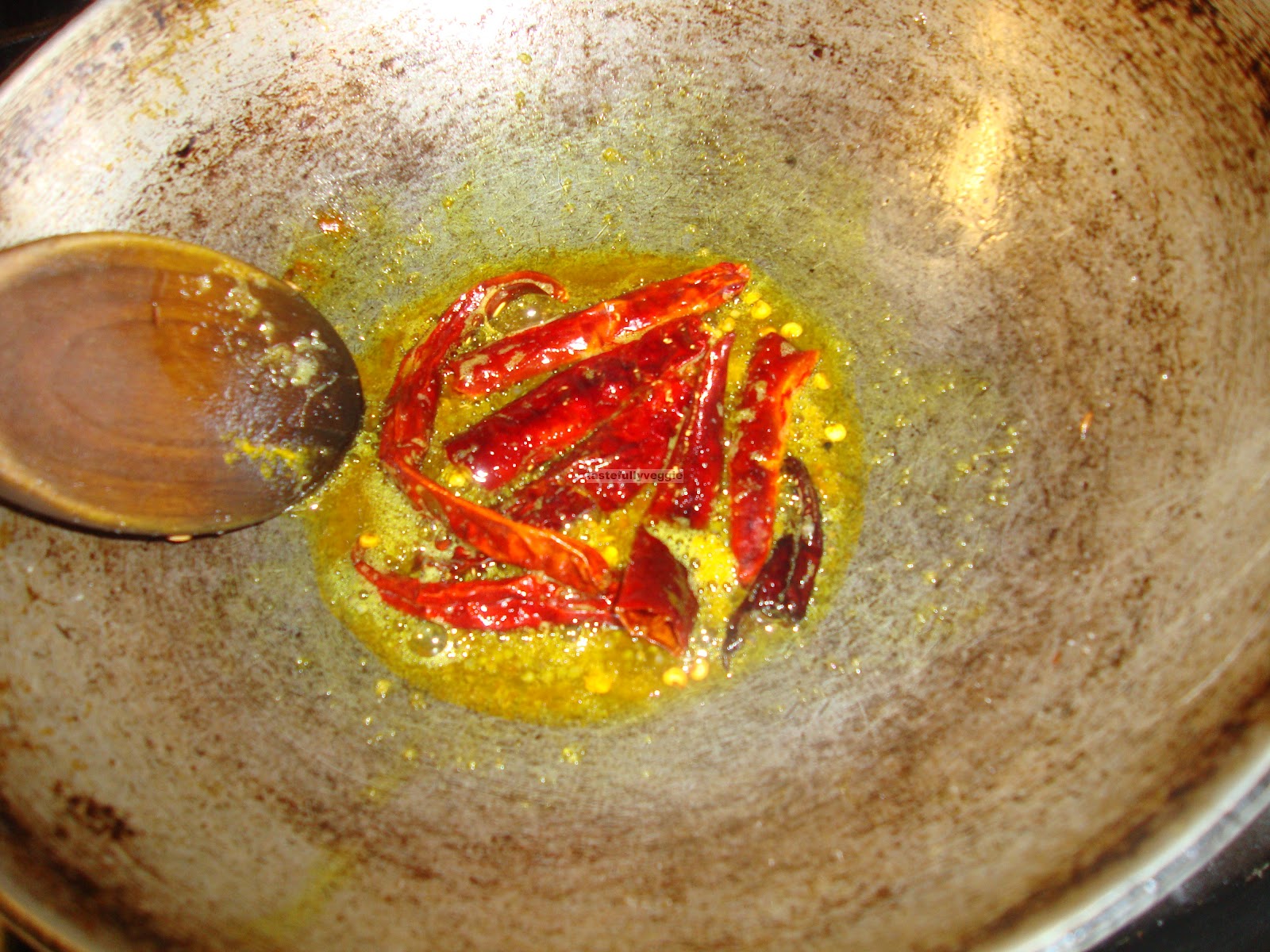
Heat some oil and add mustard seeds, urd dal, fenugreek seeds, dry red chillies, asafoetida and turmeric powder. Allow the mustard seeds to crackle

Add the garlic cloves and curry leaves and sauté for couple of minutes

Add little over a cup of water and the tamarind paste. Also add required salt. Cook until the garlic softens and water is reduced by half

Add the paste, jaggery, top up some water and allow to simmer for about ten minutes, by this time, your kitchen will be filled with aroma

Serve with steamed rice or idli/dosa.


Friday, 17 February 2012

Iru Puli Kuzhambu


Iru Puli Kuzhambu


Lately, I have been trying to make things other than usual sambar to mix with rice. One such recipe I came across was this iru puli kuzhambu (which is basically a sauce with two sources of sourness in it). I saw this recipe on a television program where they show traditional recipes so they are preserved and do not get lost after a certain generation. It was one of those recipes that made me want to do at the next immediate chance. It was a lazy Saturday morning and I did not want to think much about the menu and got on with it. On the show she used drumstick, pumpkin and ashgourd. I had pumpkin and dudhi readily accessible and waiting to be used from my freezer so just used them. I am guessing that even eggplants would be a good addition to this. This recipe uses tamarind as well as yogurt to impart sour flavour and despite that it is not too sour but very well balanced. The flavours are so subtle and yum! Here is the recipe…

1 teaspoon tamarind extract
1 cup pumpkin
1 cup dudhi
1 cup yogurt
1 heaped teaspoon fenugreek seeds
4 dry red chillies
5 teaspoon dessicated coconut/fresh coconut
Turmeric powder
Asafoetida
Salt to taste
Curry leaves
1 teaspoon mustard seeds
Cooking oil

Boil the vegetables, pumpkin and dudhi in water and when half cooked, add the tamarind extract, turmeric and asafoetida

Roast the fenugreek seeds until its colour changes, roast dry red chillies until crisp, keep aside to cool and grind to paste along with the coconut

Mix this paste with the yogurt well


Add this yogurt mixture to the boiling vegetables (once they are done) and keep on low flame. Cook just until it begins to boil gently

Heat little oil in a small pan and add mustard seeds, once it splutters add curry leaves and drop this into the boiled mixture. Add required salt and mix and it is ready to serve!


Tuesday, 1 November 2011

Ennai Kathrikai Kuzhambu (Brinjal/Eggplant in a Tangy Sauce)


Ennai Kathrikai Kuzhambu (Brinjal/Eggplant in a Tangy Sauce)


I cannot have enough of eggplant and especially the variety of them that I used to get in India. My recent visit to the Indian grocery shop gave me the chance to pick the thin long variety of violet eggplants. I pounced on that opportunity and while piling bags of it, had already made up my mind that I want to try ‘ennai kathrikai kuzhambu’. It was a mistake to shop on empty stomach cos I was drooling over the veggies as I picked the good ones. I have not made this particular recipe before but based on what I have tasted in the past, just put together a recipe. I had also googled quickly to ensure I was not miles away from what others would call ‘ennai kathrikai’. Honestly, it does not matter what it was called, I was looking for a spicy, tangy eggplant loaded recipe and here it is. Although most people may prefer to use the smaller round variety of eggplants for this, I had no choice. No regrets as it came out super yummy. For those unfamiliar with the name of the dish, ‘ennai’ refers to oil and ‘kathrikai’ refers to eggplant. Yes, there is little point in cutting back on the oil but don’t go overboard.

6-8 eggplants, slit into four with their stalk intact
1 tablespoon coriander seeds
1 tablespoon channa dal
3 dry red chillies
1 teaspoon sesame seeds
1 ½ teaspoons tamarind paste
½ teaspoon chilly powder
1 teaspoon mustard seeds
¼ teaspoon ground fenugreek powder or ½ teaspoon fenugreek seeds
Asafoetida
Cooking oil
Turmeric powder
Salt to taste

Roast coriander seeds until aromatic, channa dal until golden brown, red chillies until it turns darker, sesame seeds until it pops. Cool and grind to fine powder


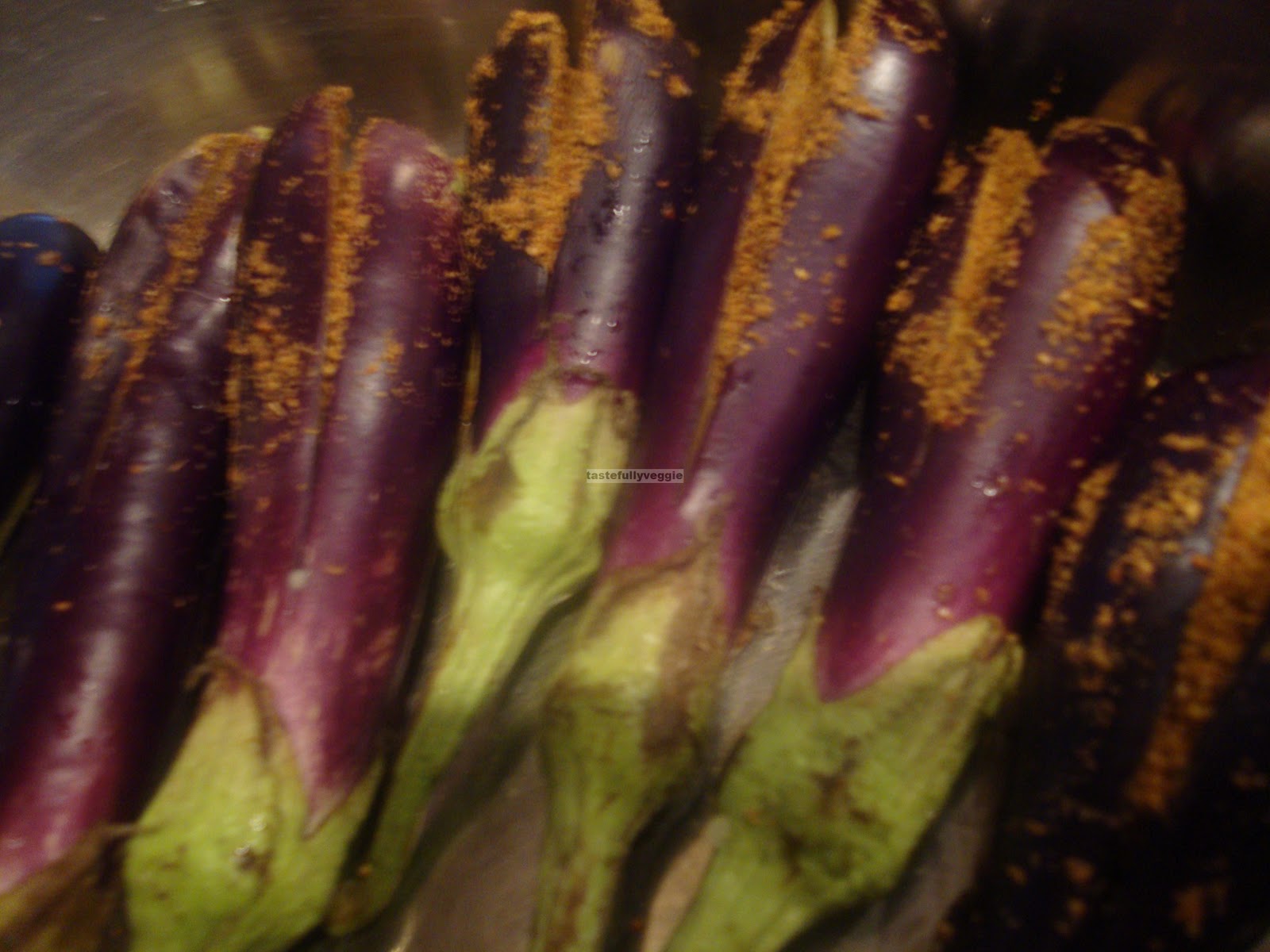
Stuff the ground powder generously into the slit eggplant.

Arrange all of the eggplants in a saucepan and drizzle oil on each of them and also sprinkle salt just enough for the eggplants

Cook covered stirring in between until the eggplants are cooked

In the meantime, heat oil in another saucepan and add mustard seeds and once it splutters, add the fenugreek seeds/powder, asafoetida and turmeric powder and two cups water with tamarind paste andboil until about 25% of it evaporates


Add salt, chilly powder and couple of spoons of the leftover powder ground to stuff the eggplants. Simmer and as it begins to thicken, add this mixture to the cooked eggplant and boil briefly. You may need to add bit more water depending on how think you like but also remember that it thickens as it cools. Mine was a bit watery so I made a paste using one teaspoon rice flour and added it. Allow to boil so the rice flour cooks.

Serve hot with freshly steamed rice and a dollop of ghee or oil

Sunday, 23 October 2011

Sodhi


Sodhi


Rightly or wrongly some dishes were always associated with certain communities and some were usually thought to be not so typical of a community. Well, atleast we were of that thinking when it comes to aapam so needless to say it is not like I was very familiar with a side dish for it. Growing up in Chennai meant I had access to the variety of dishes popular among different communities and aapam was one such favourite of mine. It is usually served with sweetened coconut milk which I must say is not my favourite. I find it a bit bland and not lifting up the aapam but sometimes I am happy to tuck in. Couple of years back a friend and neighbour of ours had her MIL visiting her and she was kind enough to invite us to have aapam and sodhi. At that time I was not a food blogger but was interested in recipes. It was during a recent visit that I quickly asked her for the recipe and could not get the details. Based on what I picked up and tasted, I started making my version and it goes down very well. I am aware that usually sodhi is considered a laborious dish as it involves making coconut milk of desired thickness and most traditional recipes I was told do not use tomatoes. My version and the one I was offered uses tomato and kept things rather simple. It tastes great with aapam and you could have it with anything like dosa, idli or even rice. I add soya chunks and peas to it to enhance the nutritive value and also because I do not have to prepare vegetables separately. Here is how I make it…

1 cup peas
1 onion, finely chopped
Handful of soya chunks, soaked and boiled (or cooked as per package instruction)
1 sachet creamed coconut or 1 cup coconut milk
1 teaspoon mustard seeds
½ teaspoon sambar powder
1 teaspoon chilly powder
Asafoetida
Salt to taste
Turmeric powder

Heat oil and allow the mustard seeds to splutter and then add the onions and cook until soft

Add the peas, turmeric powder asafoetida tomatoes and cook until mushy


Add the sambar powder, chilly powder, required water and also the coconut cream

Allow to boil and all the raw smell goes away and then add required salt and it is ready to serve!

I am sending this to http://www.cookingwithsiri.com/p/healing-foods-event-page.html, http://saffronstreaks.wordpress.com/2011/10/03/announcing-healing-foods-event-and-giveaway-coconut/

Tuesday, 16 August 2011

Radish Leaf Masiyal (Radish leaves in Tangy Sauce)


Radish Leaf Masiyal (Radish leaves in Tangy Sauce)


There is something magical about growing your own produce and cooking yummy food with it. This year we decided to grow from seeds rather than buy pots of plants that are about to bear veggies. While most of the seed packets were misplaced, we managed to find radish and sowed it. We were lucky and it has grown in abundance. Looking at the reddish-pinkish bulbs made me so happy and first thing that had to be done was radish raita. The green leaves on top looked so nice and fresh and I knew it was organic because we were the ones who grew it. I did not want to waste the lovely leaves which I am sure like most green leafy vegetables has a whole host of goodness. My grandmother confirmed that these leaves can be consumed and gave me this recipe. It is a must try…

Couple of handful of radish leaves, washed and chopped
1 teaspoon mustard seeds
1 tablespoon channa dal
1 teaspoon urd dal
2-3 dry red chillies
2 green chillies, chopped
¾ - 1 teaspoon tamarind paste
2 teaspoon sambar powder
Turmeric powder
Asafoetida
Salt to taste
Cooking oil

Heat some oil and add the mustard seeds, red chillies, urd dal and channa dal

Once the seeds splutter, add the radish leaves and green chillies. Also add the turmeric powder and asafoetida and sauté until leaves wilt

Add the tamarind paste and water and cook until all raw smell goes and leaves are done and then add sambar powder and simmer until raw smell goes

Serve with rice, upma or pongal